

After Sunset: Why BESS Is Becoming Essential to the Energy Transition
6 minute read
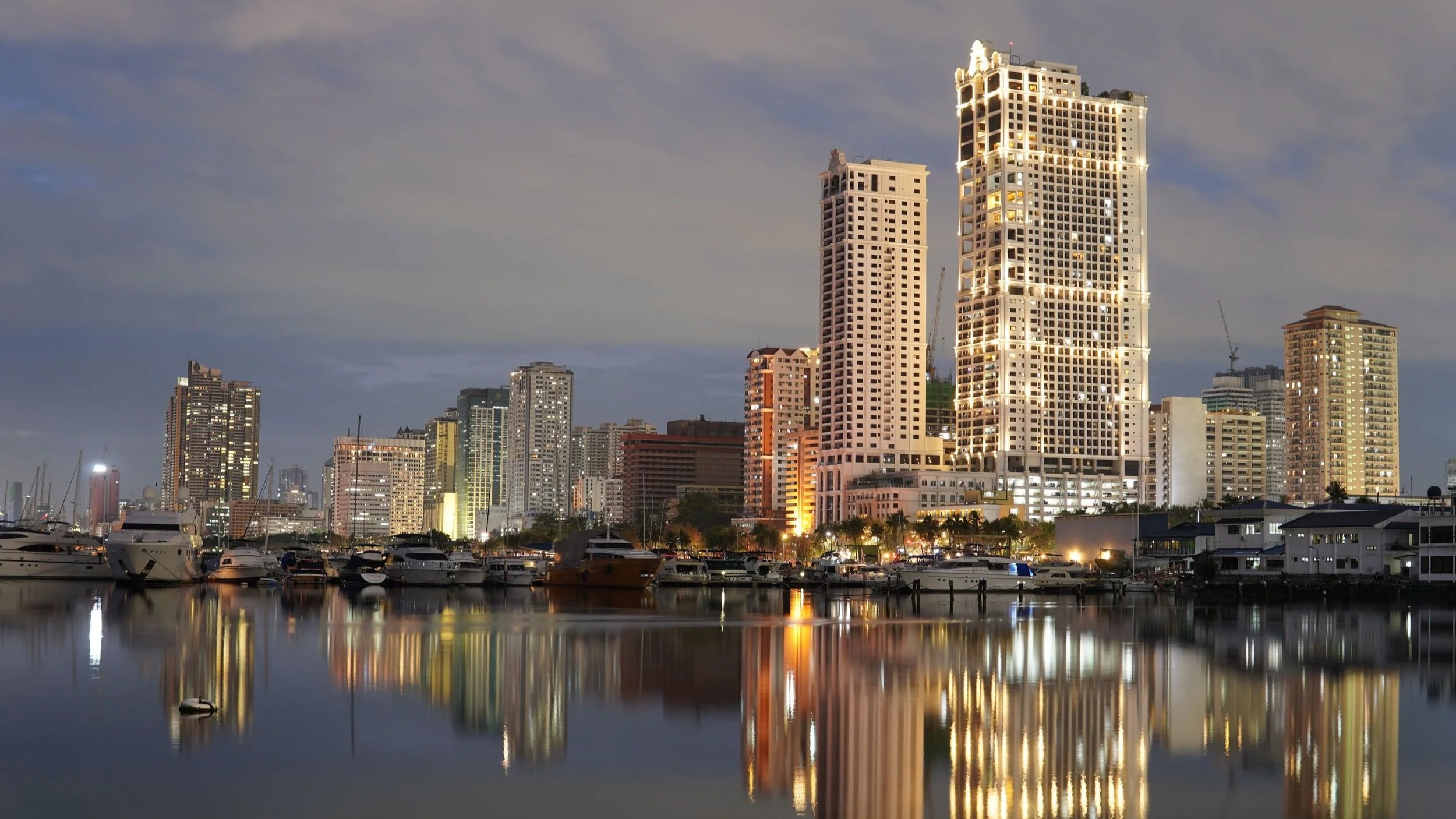
I’ve just returned to the Philippines during the hottest months of the year, when electricity demand across the country seems to rise with the temperature itself.
By mid-afternoon, air conditioners are working overtime in homes, offices and shopping malls across Metro Manila. The heat lingers long after sunset. Even late into the evening, the grid remains under pressure as millions of people continue trying to cool homes, power businesses and escape the humidity.
And yet, during the middle of the day, the country is increasingly surrounded by one of the world’s fastest-growing energy resources: solar power.
That should be good news.
For countries like the Philippines — where electricity prices remain among the highest in Southeast Asia and imported fossil fuels still play a major role in the energy mix — renewable energy and battery storage systems could fundamentally reshape long-term energy affordability and energy security.
But they also expose a new reality about the global clean energy transition.
Generating renewable electricity is no longer the hardest part.
The harder challenge is making it available after sunset.
The Renewable Energy Transition Has Reached a Turning Point
According to Ember’s Global Electricity Review 2026, clean electricity met all growth in global electricity demand in 2025 for the first time outside a major economic downturn. Solar alone accounted for three-quarters of new demand growth worldwide.
That marks a historic shift for the global renewable energy sector.
For decades, rising electricity demand almost automatically meant burning more fossil fuels. Economic growth and coal or gas consumption moved together.
Now that relationship is beginning to break.
“The world is entering an era of clean growth and exiting the era of fossil growth in the power sector” Ember
Solar energy is scaling faster than many expected, renewable electricity costs continue to fall and solar generation is becoming increasingly abundant during daylight hours.
But abundance creates its own infrastructure challenge.
Electricity demand does not disappear when the sun goes down.
In fast-growing economies like the ASEAN, evening electricity demand can remain extremely high well into the night, particularly during periods of extreme heat. Offices stay lit. Restaurants remain busy. Air conditioners continue running in homes and apartment buildings across dense urban areas.
This creates a mismatch modern power systems are now racing to solve.
Solar energy is generated during the day.
But peak electricity demand often arrives later.
BESS Is Becoming the Missing Link
This is why Battery Energy Storage Systems (BESS) are quickly moving from supporting technology to essential energy infrastructure.
One statistic from Ember’s report captures the scale of the shift already underway:
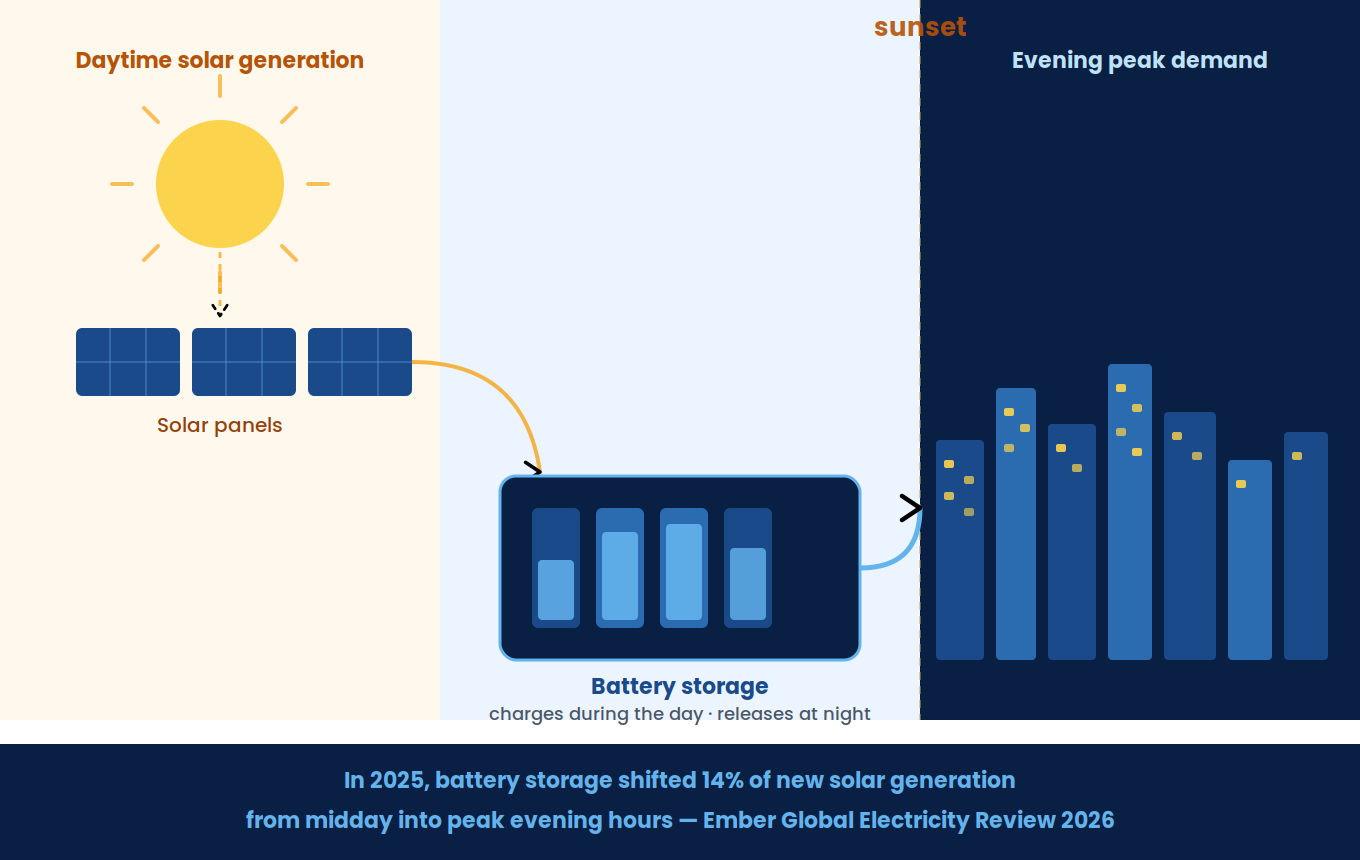
In 2025, the world installed enough battery storage capacity to shift 14% of new solar generation from midday into other hours of the day.
“The world is entering an era of clean growth and exiting the era of fossil growth in the power sector” - Ember
In simple terms, BESS technology is beginning to allow energy systems to store lower-cost daytime solar energy and deploy it later when electricity demand peaks.
That changes the economics of electricity entirely.
A few years ago, the conversation around renewable energy focused mainly on whether solar and wind could compete with fossil fuels on cost.
Today, in many parts of the world, they already can.
The bigger issue now is grid reliability and energy resilience.
How do countries make renewable electricity available not only when it is generated, but when people actually need it?
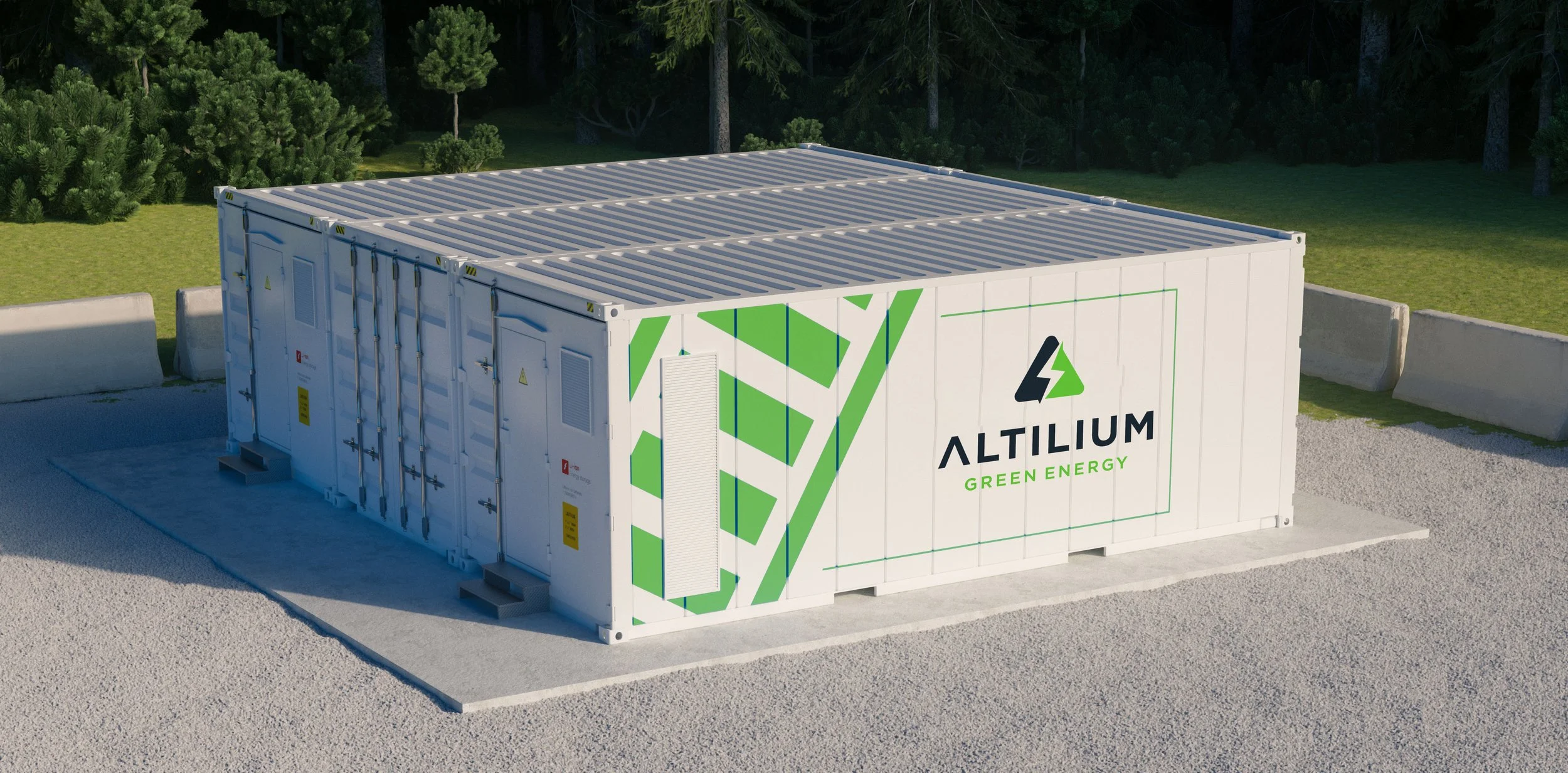
Grid-scale Battery Energy Storage Systems are increasingly becoming the answer.
Countries like Australia are already demonstrating how large-scale BESS infrastructure can stabilise grids, improve grid flexibility and reduce dependence on fossil fuel generation during evening demand peaks.
For the Philippines, the implications are significant.
The ability to store lower-cost solar electricity and deploy it later through advanced battery energy storage systems could help improve grid resilience, reduce exposure to volatile imported fuel prices and strengthen long-term energy security.
Energy Storage Infrastructure Is Reshaping the Power Sector
What makes this moment important is that the global clean energy transition is no longer just about generating renewable electricity.
It is about managing it intelligently and reliably.
For years, renewable energy was treated as an alternative technology — something gradually being added to existing power systems dominated by fossil fuels.
That era is ending.
Solar power is becoming a central part of modern electricity infrastructure. And as it scales, Battery Energy Storage Systems become essential alongside it.
The countries that adapt fastest to this shift will not simply be the ones that build the most renewable energy capacity. They will be the ones that build the strongest renewable energy and energy storage infrastructure around it.
That includes:
BESS deployment
smart grid infrastructure
grid flexibility
energy resilience
and the battery supply chains needed to support long-term electrification
The Energy Transition After Sunset
Sitting in Manila traffic at dusk, it becomes obvious why this matters.
Electricity demand does not peak when the sun is strongest. It peaks later — when homes are cooling down for the evening, offices remain lit and cities are still fully awake.
That is the next challenge of the clean energy transition.
The first phase was about generating renewable electricity.
The next phase is about ensuring renewable energy remains available after sunset.
And increasingly, Battery Energy Storage Systems (BESS) will determine which countries succeed in doing it.
Is your organisation thinking about what comes after solar?
We'd welcome the conversation. Get in touch